
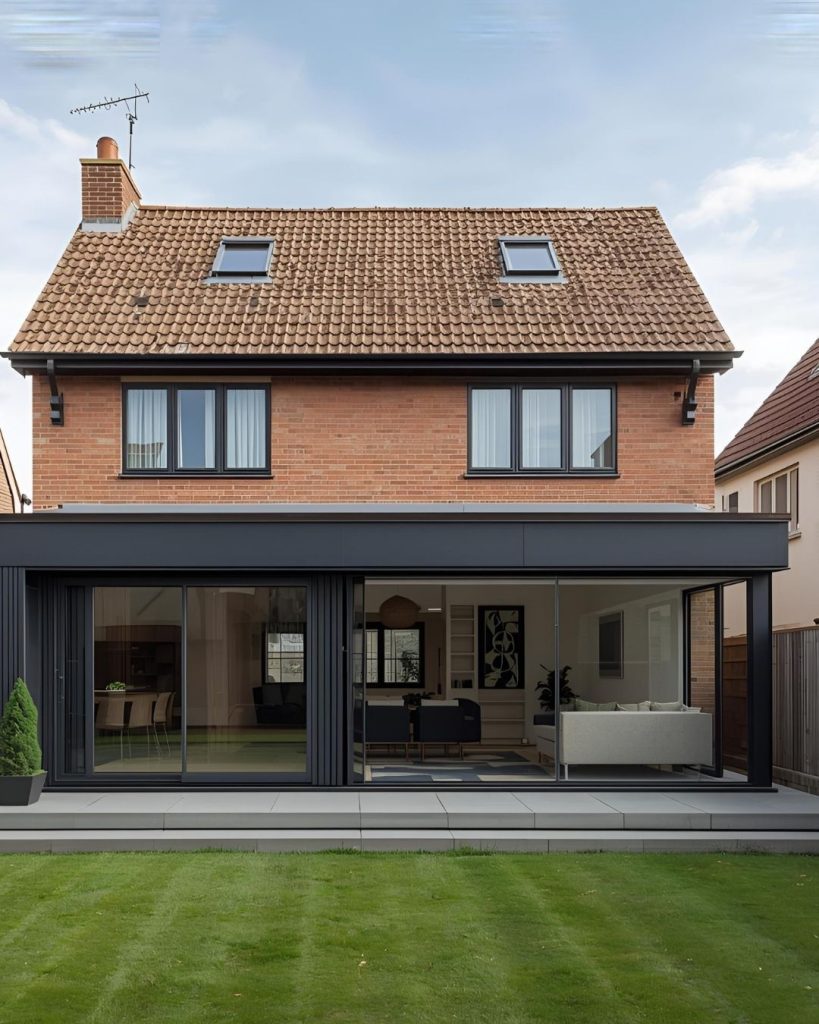
Single Storey vs Double Storey Extensions in Harlow | Local Builder’s Guide
When you’ve decided to extend your Harlow home, the first major decision is whether to build one storey or two. On the surface it seems simple — if you need ground floor space, build a single storey extension, and if you need space upstairs as well, build a double storey. But the choice involves more than counting how many rooms you want to add. Cost, planning requirements, construction time, disruption, impact on neighbours, and the proportions of your existing property all influence which option makes the most practical and financial sense for your specific situation.
This guide compares both options honestly — the real costs, the planning differences, the construction timescales, and the factors that Harlow homeowners should weigh up before committing to either approach.
What Does Each Option Give You?
A single storey extension adds ground floor space only. The most common use across Harlow is a rear extension creating a larger kitchen-diner, an expanded living area, a home office, or a ground floor bedroom. The extension sits under its own roof — typically flat or lean-to — at the back or side of the house, below the first floor windows.
A double storey extension adds space on both floors simultaneously. The ground floor typically provides the same enlarged kitchen-diner or living space, while the first floor adds one or two bedrooms, a bathroom, or an ensuite above. The extension carries a continuous roof structure that ties into the existing house, creating a more substantial addition that significantly increases the property’s overall size.
The difference in usable space is considerable. A three metre deep rear extension across the width of a typical Harlow semi gives you roughly twelve to fifteen square metres of additional ground floor space. Build the same footprint as a double storey and you gain that same ground floor area plus an equivalent amount above — twenty-four to thirty square metres total from the same foundation.
Cost Comparison
Cost is usually the deciding factor, and this is where double storey extensions offer a compelling advantage in value per square metre. Building two storeys doesn’t cost twice as much as building one, because the most expensive elements — foundations, groundwork, and the roof — serve both floors.
A single storey rear extension in Harlow typically costs between £20,000 and £42,000 depending on the size, specification, and amount of finishing included. A modest three metre extension at the lower end, a generous full-width extension with bi-fold doors, skylights, and a high-specification kitchen-diner at the upper end.
A double storey rear extension of the same footprint typically costs between £32,000 and £65,000. The additional cost covers the first floor walls, the floor structure between levels, the extended roof, and the internal fitting of the upstairs rooms — plastering, electrics, plumbing for any bathrooms, flooring, and decoration. But the foundations, groundwork, scaffolding, and much of the external brickwork only happen once regardless of how many storeys sit above them.
The cost per square metre makes the value difference clear. A single storey extension in Harlow typically works out at £1,700 to £2,400 per square metre. A double storey comes in at £1,300 to £1,900 per square metre because the fixed costs spread across a larger total area. If you need space on both floors, the double storey delivers significantly more room per pound than building separate projects.
However, if you only need ground floor space, a single storey extension remains the more cost-effective choice. Paying for a first floor you don’t need simply because the per-square-metre rate is lower makes no financial sense. The right extension is the one that gives you the space you actually require at a price that works for your budget.
Planning Permission
The planning requirements differ significantly between single and double storey extensions, and this is where single storey projects hold a clear advantage.
Single storey rear extensions benefit from generous permitted development allowances. For attached houses — the terraces and semis that make up much of Harlow’s housing stock across estates like Staple Tye, Great Parndon, Potter Street, and Mark Hall — you can typically extend three metres from the original rear wall without planning permission. For detached properties, the allowance increases to four metres. Larger extensions up to six metres for attached houses or eight metres for detached are possible through the prior approval process, which is simpler and faster than a full planning application.
Double storey extensions face tighter restrictions under permitted development. The maximum depth is three metres from the original rear wall, the extension must sit at least seven metres from the rear boundary, and the roof pitch must match the existing house. The eaves and ridge cannot exceed the height of the existing roof. If your property can’t meet all these conditions — and many Harlow homes with shorter gardens or close rear boundaries can’t — you’ll need a full planning application through Harlow District Council.
Planning applications add both time and cost. An application typically takes eight to twelve weeks for a decision. Architectural drawings need preparing, the application fee needs paying, and there’s uncertainty about the outcome until the decision arrives. Planning officers assess impact on neighbours, overlooking, loss of light, and design compatibility with the existing streetscape.
For many Harlow homeowners, the ability to build a single storey extension under permitted development — avoiding the planning process entirely — represents a significant advantage in both timeline and certainty.
Construction Time
Single storey extensions are faster to build. A typical single storey rear extension takes eight to twelve weeks from breaking ground to completion. A double storey extension takes twelve to sixteen weeks because there’s more structural work, more brickwork, more internal fitting, and an entire additional floor of plastering, electrics, plumbing, and finishing to complete.
If planning permission is required for the double storey option, add eight to twelve weeks for the application process on top of the build time. A single storey extension proceeding under permitted development can start as soon as the design is finalised and building control is notified, putting you in your new space potentially months earlier than the double storey alternative.
Disruption
Both extension types cause disruption, but the nature and duration differ in practice.
A single storey extension concentrates the disruption on the ground floor. The rear wall is opened up, the kitchen or living room is out of action during the connection phase, and there’s noise and mess while construction is underway. But the bedrooms and bathrooms upstairs remain completely unaffected, and the shorter build programme means the disruption ends sooner.
A double storey extension affects both floors. The ground floor disruption is similar, but upstairs you also have construction noise, potential access limitations while scaffolding is in place, and a period where first floor rooms adjacent to the new build may be affected by dust and vibration. The structural connection between the new first floor rooms and the existing landing involves work that temporarily impacts the upstairs circulation. Living in the house during a double storey extension is perfectly manageable but requires more patience and flexibility than a single storey build.
Impact on Your Property
How each option affects the appearance of your home matters, particularly from the street and for the relationship with neighbours.
A single storey rear extension is largely invisible from the front. The roofline doesn’t change, the front elevation stays the same, and neighbours walking past may not even notice you’ve extended. This makes single storey extensions straightforward in terms of both planning acceptability and neighbourhood relations.
A double storey extension changes the roofline and proportions of the property when viewed from the rear and potentially the side. A well-designed double storey that matches the existing roof pitch, materials, and window proportions looks like it was always part of the house. A poorly designed one looks obviously bolted on and can overwhelm the original property. Good architectural design matters more with a double storey extension than a single storey, and investing in proper drawings to get the proportions right is money well spent.
Harlow’s housing estates were designed with consistent streetscapes, and a double storey extension that disrupts the established rhythm of a terrace or semi-detached pair draws attention in a way that a single storey rear extension behind the roofline doesn’t. Planning officers are conscious of this and assess double storey proposals with more scrutiny than single storey applications.
Which Suits Your Harlow Home?
The right choice depends on what you actually need and what your property can accommodate.
Choose a single storey extension if you primarily need ground floor space, your garden is deep enough to extend meaningfully, you want to avoid the planning application process, your budget is tighter, or you want the project completed as quickly as possible. Single storey extensions are the right answer for the majority of Harlow homeowners wanting a bigger kitchen-diner, more living space, or a ground floor home office.
Choose a double storey extension if you need space on both floors, the cost per square metre matters because you’re adding significant area, your garden depth and boundary distances allow double storey development, and you want to maximise the value added to your property. Double storey extensions suit growing families who need both an enlarged kitchen-diner and additional bedrooms or bathrooms simultaneously.
Consider a phased approach if your budget doesn’t stretch to both floors today but you know you’ll need the upstairs space eventually. Building a single storey extension now with foundations designed to support a future first floor means you can add the upper storey later without starting from scratch. This costs slightly more overall than building both storeys at once, but it spreads the investment and gives you the ground floor space you need immediately while keeping the option open for the future.
Getting Started
Whichever option suits your situation, the starting point is the same — a conversation about what you need, what your Harlow property can accommodate, and honest advice on the best approach for your specific circumstances.
If you’re considering an extension, get in touch for a free consultation. We’ll visit your property, discuss your requirements, assess the planning position, and provide a clear, detailed quote so you can make an informed decision about your project.